
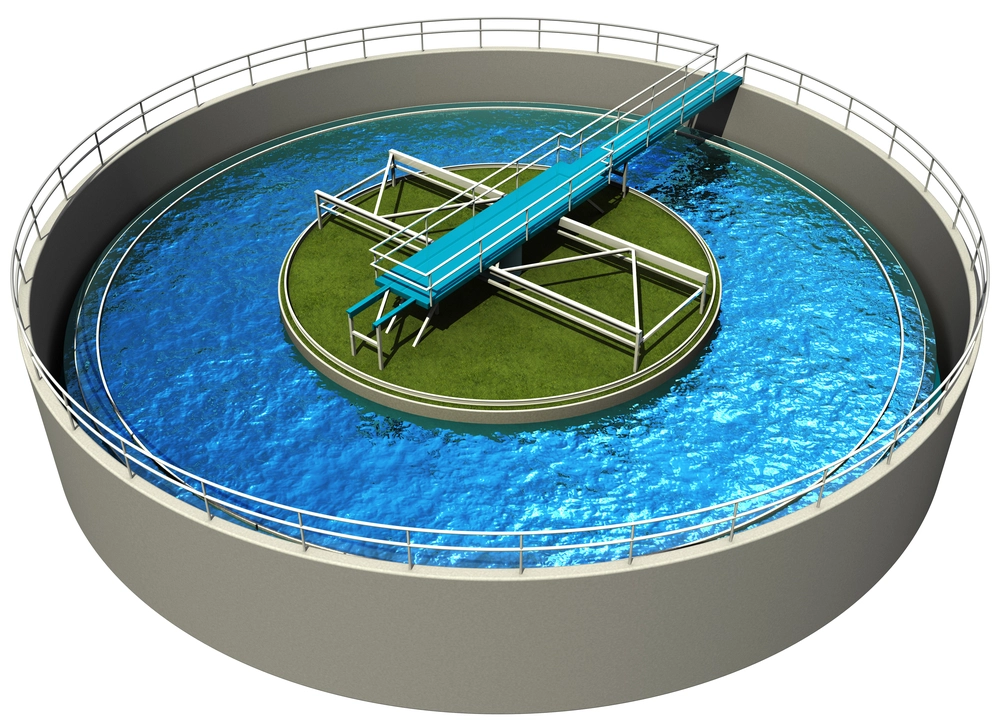
Dissolved air flotation (DAF) is a water treatment process that clarifies wastewaters (or other waters) by the removal of suspended matter such as oil or solids. The removal is achieved by dissolving air in the water or wastewater under pressure and then releasing the air at atmospheric pressure in a flotation tank basin. The released air forms tiny bubbles which adhere to the suspended matter causing the suspended matter to float to the surface of the water where it may then be removed by a skimming device.[1][2][3]
Dissolved air flotation is very widely used in treating the industrial wastewater effluents from oil refineries, petrochemical and chemical plants, natural gas processing plants, paper mills, general water treatment and similar industrial facilities.
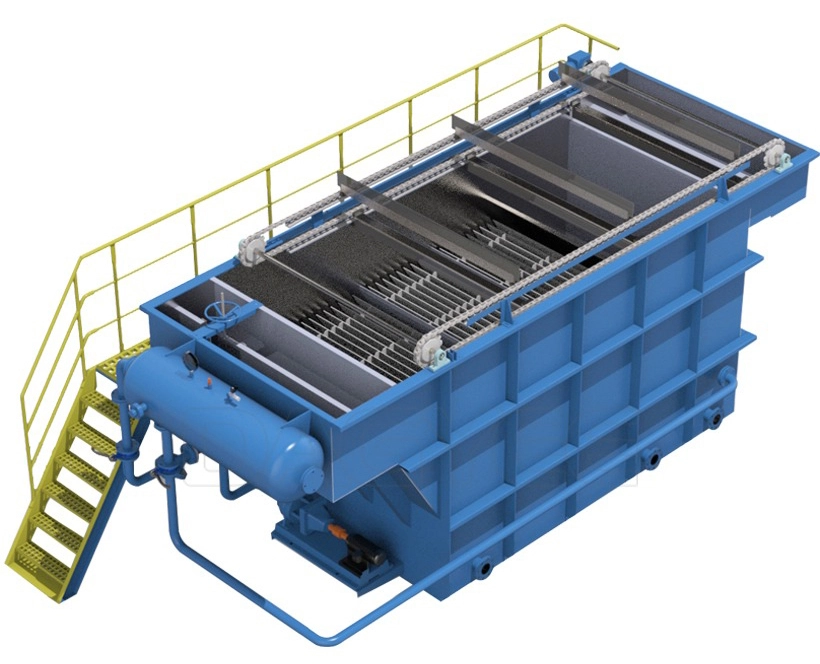
- High quality of treated water.
- Adaptability of the JEDAF equipment and coagulation-flocculation and pH adjustment system, exclusive for each type of water and requirements of contaminant concentrations in the clarified water.
- Fast start-up.
- Thicker sludge, therefore less sludge production and lower management and treatment costs.
- Footprint reduced.
- Easy to operate.